Generative AI Filmmaking 2026: Roadmap for Professional & Independent Creators
Explore the 2026 roadmap for generative AI in professional filmmaking. Learn about production-grade character consistency, agentic workflows with Gemini 3, ChatGPT-5:2 and the shift toward independent OTT distribution, Generative AI Filmmaking, Agentic Filmmaking, Character Consistency AI, Independent OTT, Gemini 3 Filmmaking, Micro-Drama Trends 2026.
Introduction: The Cinematic Landscape in Flux
The cinematic industry is currently undergoing a significant transformation, propelled by advancements in technology and, most notably, the rise of artificial intelligence (AI). Traditional filmmaking methods that have dominated for decades are being disrupted as filmmakers and studios increasingly turn to AI-driven solutions. This shift is not merely a minor adjustment; rather, it represents a new era in filmmaking where creativity and technology converge in unprecedented ways.
One of the most striking developments in the cinematic landscape is the emergence of generative AI. This technology allows filmmakers to automate various aspects of the production process, from scripting to post-production editing. By leveraging AI tools, creators can streamline workflows, reduce costs, and produce content more efficiently than ever before. Consequently, the advantages of utilizing AI within the cinematic ecosystem are reshaping how stories are told and experienced.Moreover, the disruption caused by these technological advancements raises questions about the very nature of creativity and authorship in cinema. As AI continues to evolve, it challenges our traditional understanding of artistic expression. Can a machine truly replicate the nuanced understanding of human emotion? Or does the integration of AI potentially enhance the creative process by offering new narrative possibilities? Such inquiries sit at the heart of the industry's transition, prompting filmmakers and audiences alike to reconsider their expectations and definitions of cinema.
In this context, it is essential to explore how the convergence of these technologies not only affects the production side but also impacts distribution, marketing, and audience engagement. As the cinematic landscape shifts towards a more automated future, stakeholders must adapt to navigate this new terrain effectively. The changes unfolding in the industry signal the beginning of a transformation that could redefine the cinematic experience as we know it.
The Rise of Generative AI in Film Production
Generative AI, a subset of artificial intelligence, refers to algorithms that can generate new content by learning patterns from existing data. In recent years, this technology has gained significant traction in the cinematic industry, fundamentally altering the landscape of film production. Today, filmmakers leverage generative AI to enhance various aspects of their craft, from pre-production to post-production, leading to improved efficiency and creativity.
One of the most notable applications of generative AI in film production is in the realm of visual effects (VFX). Traditional VFX creation can be labor-intensive and time-consuming, but generative AI tools can automate much of this process. For instance, AI can be used to generate realistic textures, backgrounds, and even character movements based on inputs from human talents. This not only speeds up production timelines but also enables filmmakers to explore creative possibilities that might have otherwise been financially prohibitive.
In addition to visual effects, generative AI is streamlining post-production processes. Tasks such as video editing, color grading, and sound design can be enhanced through the capabilities of AI-driven tools. These programs analyze vast amounts of footage to produce cohesive edits, ensuring that the director's vision is met while minimizing the time spent on repetitive tasks. Furthermore, AI algorithms can assist in audio enhancement, providing tools that refine sound quality and atmosphere, enriching the overall viewing experience.
Moreover, generative AI is revolutionizing storytelling. Filmmakers can utilize AI to analyze audience preferences and trends, allowing for more nuanced narratives that resonate with viewers. By creating characters or plotlines that are aligned with contemporary societal themes and interests, AI has the potential to transform how stories are told, making them more relevant and engaging.
The Impact of High-Fidelity Video Synthesis
High-fidelity video synthesis represents a significant leap forward in the cinematic industry, driven by advancements in AI technology. These innovations allow filmmakers to create visually stunning sequences that were, until recently, the exclusive domain of major studios with substantial budgets. Independent filmmakers, now empowered, are increasingly utilizing high-fidelity synthesis techniques to produce films that rival the quality of mainstream productions.
One of the primary implications of this technology is the democratization of filmmaking. Gone are the days when only those with extensive resources could afford the intricate visual effects required to tell a compelling story. High-fidelity video synthesis enables creators to generate realistic graphics and elaborate scenes without the need for extensive physical sets or costly CGI specialists. This newfound accessibility encourages a broader array of voices in the industry, allowing diverse narratives to emerge and gain visibility.
Moreover, the ability to create high-quality visual content at reduced costs not only benefits independent filmmakers but also influences the competitive dynamics of the film industry. Major studios are now compelled to reconsider their strategies in light of these advancements. The once-clear distinction between blockbuster productions and independent films is blurred, as audiences increasingly embrace innovative storytelling and fresh ideas that can be realized through high-fidelity video synthesis.
As this technology continues to evolve, it will likely pave the way for new genres and styles of filmmaking that challenge traditional norms. With the barriers to entry crumbling, high-fidelity video synthesis is on the brink of transforming the cinematic landscape. It is a powerful tool that empowers storytellers, sparking creativity while reshaping the relationship between filmmakers and their audiences. As the industry adapts to these changes, the possibilities for cinematic expression become virtually limitless.
Understanding Temporal Consistency and Autonomous Reasoning
In the evolving landscape of the cinematic industry, two pivotal concepts are emerging at the forefront of artificial intelligence technologies: temporal consistency and autonomous reasoning. These concepts not only enrich the creative process but also redefine narrative structures in filmmaking. Temporal consistency refers to the seamless alignment of elements throughout a story’s timeline, ensuring that each scene contributes coherently to the overall narrative flow. By employing AI algorithms that specialize in temporal consistency, filmmakers can maintain logical continuity, enhancing viewers' immersion and emotional engagement.
On the other hand, autonomous reasoning pertains to the AI's ability to analyze, interpret, and make creative decisions independently. This technological advancement allows machines to evaluate narrative choices based on contextual understanding, ultimately propelling the storytelling process. For instance, an AI that exhibits autonomous reasoning can suggest plot developments, character arcs, and dialogue that aligns with the established thematic elements of a film. This capability signifies a substantial shift from traditional filmmaking practices, where such decisions were primarily human-centric.
Furthermore, the integration of these technologies not only aids in maintaining narrative coherence but also opens up new avenues for creativity. Filmmakers can now collaborate with AI systems that can analyze vast amounts of data from successful stories, identifying patterns and trends that resonate with audiences. The use of AI to enhance temporal consistency and enable autonomous reasoning is poised to revolutionize the filmmaking domain. By leveraging these advanced technologies, creators can produce films that are not only coherent in their narrative but also innovative in their execution, paving the way for a new era of cinematic storytelling.
Dismantling Traditional Barriers to Entry
The cinematic industry has long been characterized by significant barriers to entry that have curtailed the opportunities for aspiring filmmakers. Historically, these barriers have included substantial capital investment, limited access to high-quality resources for visual effects, and complex distribution challenges. However, the advent of artificial intelligence and other technological advancements is fundamentally reshaping this landscape.
One prominent challenge has been the high costs associated with production equipment and advanced software necessary for creating compelling visual effects. Traditionally, only well-funded studios could afford these tools, effectively sidelining independent filmmakers from competing on a larger scale. Now, innovative AI tools offer cost-effective alternatives that significantly lower these financial requirements. For instance, AI-driven software for video editing and special effects are making it possible for independent filmmakers to produce professional-grade content without reliance on expansive budgets.
Moreover, the shift toward digital platforms for film distribution has further democratized access to audiences. Previously, filmmakers would depend on traditional distribution avenues, which often involved lengthy negotiations and a plethora of gatekeepers. Digital streaming services, empowered by AI recommendations and analytics, have streamlined this process, allowing indie films to reach diverse audiences worldwide. This is evidenced by the emergence of films like "The Last Black Man in San Francisco," which, despite a limited budget, found significant traction and acclaim through platforms such as Amazon Prime Video.
The dismantling of these traditional barriers is not merely theoretical; it is materializing before our eyes as emerging filmmakers employ AI tools to navigate the challenges that once hindered their predecessors. By leveraging technology, they are equipped to tell compelling stories and engage with audiences on an unprecedented scale, showcasing the transformative potential of a new, more inclusive cinematic ecosystem.
Future Roadmap: Major AI Models in Cinematic Innovation
The cinematic industry is experiencing a transformative evolution, primarily driven by advancements in artificial intelligence (AI). As filmmakers, producers, and distributors integrate AI technologies, a future roadmap outlining the trajectory of these innovations is crucial. Among the anticipated trends, AI-driven content creation tools stand prominent. These models can analyze vast datasets to derive insights on narrative structures, character archetypes, and audience preferences, thereby aiding filmmakers in scriptwriting processes.
Another significant development is in the area of visual effects and animation. Machine learning algorithms can facilitate the generation of realistic visuals in real-time, reducing production time and costs significantly. Companies are beginning to adopt generative adversarial networks (GANs) for seamless enhancement of visual content, marking a new era in visual storytelling capabilities.
The distribution of cinematic content is also expected to undergo radical changes, primarily through AI-enhanced marketing strategies. Predictive analytics will enable studios to tailor marketing campaigns based on audience behavior and preferences, optimizing both outreach and engagement. Additionally, AI's role in content personalization will facilitate more targeted recommendations on streaming platforms, allowing users to discover films that align closely with their tastes.
Emerging technologies such as virtual and augmented reality, combined with AI, promise to create immersive viewing experiences that transcend traditional cinematic boundaries. As filmmakers experiment with these tools, audiences may find themselves increasingly drawn into their favorite stories.
In conclusion, the future of the cinematic industry is set to be intricately linked with advanced AI models. As these systems evolve, they will play an essential role in reshaping film production, visual aesthetics, and the entire viewing experience, paving the way for a revolution in how films are created and consumed.
Strategies for Independent Filmmakers: Navigating the Attention Economy
In the rapidly evolving cinematic landscape shaped by AI automation, independent filmmakers are presented with unique challenges and opportunities. Navigating the attention economy requires strategic approaches that harness both creative content and contemporary technology. One vital strategy is to explore private distribution channels. By focusing on niche platforms or cultivating a dedicated online presence, independent filmmakers can control their distribution, reaching audiences more effectively. These channels often have lower competition compared to mainstream platforms, facilitating meaningful engagement with targeted viewer demographics.
Moreover, audience engagement is crucial in sustaining viewership and ensuring project success. Filmmakers should prioritize building a community around their work. This can be achieved through social media interaction, behind-the-scenes content, and engaging storytelling that resonates with viewers on a personal level. Understanding audience preferences and feedback can significantly guide future projects and enhance viewer loyalty.
Additionally, leveraging AI tools can streamline processes and enhance storytelling capabilities. From scriptwriting assistance to personalized marketing strategies, AI can optimize user experiences and broaden outreach. Employing AI-driven analytics can provide insights into audience behavior, helping filmmaker audiences grow more strategically. This allows independent creators to fine-tune their content offerings and promotional tactics, optimizing their presence in an increasingly competitive market.
Ultimately, thriving in the attention economy necessitates a multifaceted approach. By utilizing private distribution channels, engaging authentically with audiences, and incorporating AI technology effectively, independent filmmakers can navigate this new cinematic terrain successfully. Remaining adaptable and innovative will be key strategies as the industry continues to evolve
Summary of the 2026 Strategic Roadmap
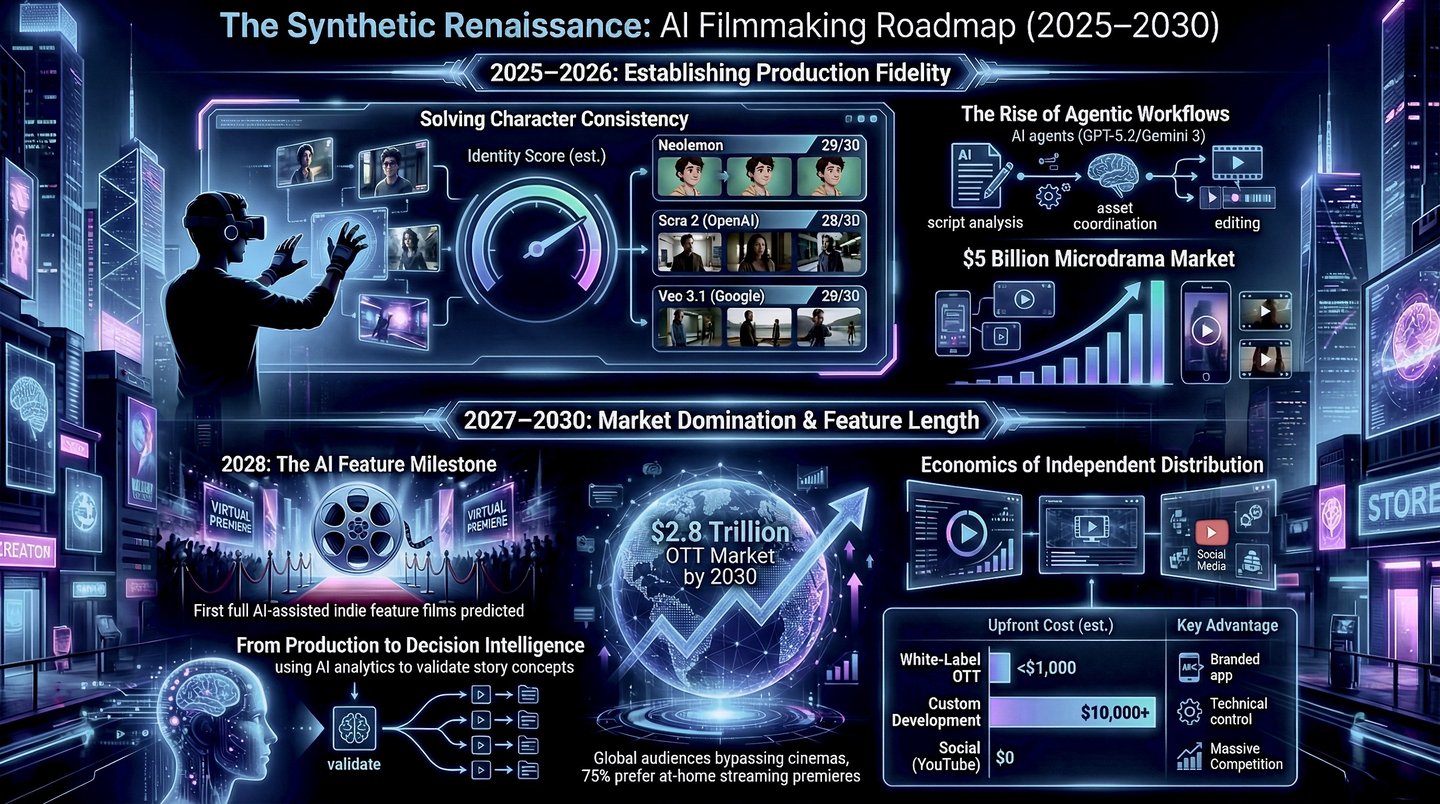
Character IP: The most valuable asset for a 2026 creator is a "Character Library" created via tools like Neolemon or Sora 2. OTT Costs: Launching a branded white-label OTT app now costs approximately $999 upfront with monthly hosting as low as $10–$50. Delivery Choice: Use Cloudflare Stream for simple minute-based pricing ($0.06/60 mins) or Mux for superior analytics and publishing speed. Market Value: Global box office is projected to grow to $35 billion in 2026, though 85% of routine viewing has shifted to at-home streaming and micro-dramas.
By Gurudas Kamat